
























India’s upcoming white-ball tour promises to be a fascinating few weeks, not only because of the much-anticipated series against England but also because of the two-match stop in Ireland beforehand. That decision, in itself, deserves praise. While the spotlight will naturally fall on the contests against England, the opportunity for India to play two matches against Ireland is an excellent initiative that benefits both teams.
From Ireland’s perspective, hosting one of the world’s strongest sides is invaluable. Playing against a top-quality team provides the kind of exposure and experience that can only help the growth of Irish cricket. It is the sort of fixture that should continue to be encouraged, and perhaps even expanded in the future. These opportunities are important for the development of the game outside the traditional powerhouses.
For India, the Ireland series also serves a useful purpose. Calling the matches warm-up games would perhaps be disrespectful, but they do offer India the chance to settle into conditions, find their rhythm, acclimatise to the environment and prepare themselves before the main event against England. It gives the players valuable game time before the bigger challenge begins.
Looking at the Indian squad, it is difficult not to be impressed by the strength of the batting. There will always be debate over one or two positions, but the top five, on paper, is arguably as strong as any in world cricket. The biggest talking point is undoubtedly Vaibhav Sooryavanshi. Given both his age and what he has already achieved, he naturally becomes one of the headline attractions of the tour.
The expectation is that Sooryavanshi will open the batting alongside Abhishek Sharma. That is where the selection conversation starts to become particularly interesting because there are several players in the squad who are natural opening batters, but only two can occupy those positions.
Sanju Samson appears the logical choice to move down to number three. Having been one of the standout performers while opening the batting in the recent T20 World Cup , it is an unusual situation for him to potentially give up his place at the top of the order. Nevertheless, number three seems to be the most suitable position for him in this line-up.
Ishan Kishan presents another selection challenge. He has been in outstanding form for quite some time and is another player who is most comfortable opening the innings. However, given the balance of the side, it looks as though he could be asked to bat at number four instead. That would leave captain Shreyas Iyer to come in at number five.
There is, of course, room for flexibility. During the Ireland series, India may choose to rotate the batting order slightly and provide different players with opportunities in different positions. However, once attention turns to England, it would not be surprising if the batting order settled into Abhishek Sharma and Vaibhav Suryavanshi at the top, followed by Sanju Samson, Ishan Kishan and Shreyas Iyer.
There may also be occasions where left-hand and right-hand combinations influence the order. With several left-handers featuring prominently in the top six, India could occasionally send in a right-handed batter to maintain variety depending on the match situation. That is something that can be assessed as the series progresses.
Shreyas Iyer taking over the captaincy is another major talking point. It is undoubtedly a significant moment for him, particularly following the decision to move on from Surya Kumar Yadav despite his success as captain, including leading India to the T20 World Cup title. Iyer is expected to do an excellent job as captain and appears well-equipped to lead the side.
Further down the batting order, Shivam Dube is expected to slot into the number six position. The balance of the side then shifts towards the bowling options, particularly with Hardik Pandya not part of this setup. Even so, India appear to have more than enough bowling resources available.

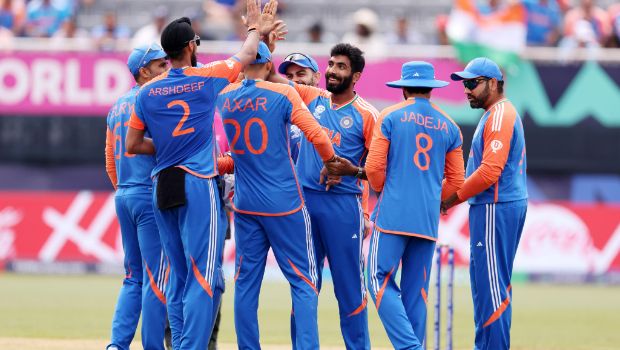
The pace attack includes Harshit Rana, who returns to the squad, alongside Arshdeep Singh and Prasidh Krishna. Prasidh, in particular, is regarded as an excellent cricketer and someone who deserves the opportunities he is receiving. Prince Yadav is also part of the squad and is expected to feature in at least one of the matches during the Ireland series.
The bowling group offers considerable flexibility, and it would not be surprising if the management rotated the attack throughout the two games against Ireland to ensure everyone gets an opportunity. The spin department is equally well balanced. Axar Patel appears certain to feature in the strongest XI, while Washington Sundar provides the off spin option and the squad also includes a leg-spinner.
Overall, the bowling attack has an impressive mix of left-arm pace, right-arm pace, left arm spin, off-spin and leg-spin, giving the team management plenty of tactical options. That variety provides an excellent balance and allows India to tailor combinations depending on conditions and opposition.
Ireland, meanwhile, enter the series under less favourable circumstances. They have been hit by several important injuries, which is a significant setback. Many of the unavailable
players have played major roles for Ireland over the past couple of years and would undoubtedly have relished the opportunity to face a team of India’s calibre.
With Lorcan Tucker set to captain the side, Ireland face a difficult challenge. It is unfortunate that they are unable to field something close to their strongest XI because that would likely have made the contest more competitive than it may ultimately prove to be.
I will be interested to see how Sooryavanshi shapes up on this tour. His achievements at such a young age have already earned widespread admiration, but this tour marks another significant step in his journey. He now enters the arena of international cricket, playing in a foreign country before a global audience.
Nobody doubts his ability, but the environment will inevitably feel different. The attention surrounding him, particularly once India move on to face England, is likely to be immense. There will be substantial media focus on such a young player, making it essential that he is well supported.
It is encouraging that his parents are with him during the tour, something that appears to be a sensible decision. Alongside the backing of senior players and team management, that support system will be important as he adjusts to the demands of international cricket.
The expectation remains that Sooryavanshi will perform well. The greater concern is not about his cricketing ability but about ensuring that everything away from the field is managed carefully so that he can concentrate fully on delivering his best performances on it.