

























Afghanistan deserve huge credit for the way they approached and won the series 4-0. The result itself is impressive, but what stood out even more was the preparation behind it. Their camp in Birmingham before the series gave them the opportunity to train in good weather, put their plans in place and arrive ready for the challenge. They looked like a very strong, well-prepared side throughout.
The series carried plenty of importance, particularly as a strong performance would have strengthened chances of securing qualification for the upcoming 50-over World Cup. Afghanistan are now well placed to make it to the main draw.
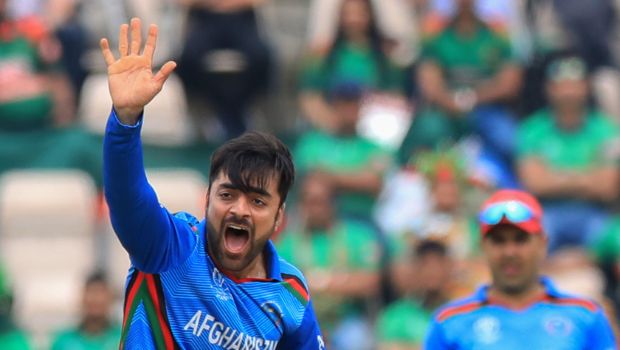
It is difficult to look at Afghanistan without mentioning the impact of their key players. Rashid Khan’s contributions in the first few games were game-changing and hugely influential. He did not play in the final match, something Ireland would have hoped could give them a better opportunity, but Afghanistan had already shown the depth and quality within their side.
I have never really questioned Afghanistan’s ability to win a series like this or to beat some of the best sides in the world in individual matches. The bigger question has always been whether they can take that ability and turn it into success at the biggest tournaments, particularly the World Cup. Right now, though, I feel they are moving very much in the right direction.
Someone like Ghazanfar is a big part of that progression. Alongside Rashid Khan, he gives Afghanistan a very potent spin attack, with the mystery spin of Ghazanfar and the quality of Rashid providing a major threat. Fazalhaq Farooqi gives them an option with the new ball, while Azmatullah Omarzai adds to their bowling resources.
The area where Afghanistan will be particularly pleased is the growing consistency in their batting. Rahmat Shah finished the series with his highest score in ODIs, while Gurbaz, Ibrahim and Sediqullah Atal also made contributions at different points. They have changed things around slightly, but several players have contributed across the series, and that should leave the batting line-up feeling confident.
There are still two areas where Afghanistan need to improve if they want to move to the next level: finishing games with both bat and ball. They need to become more clinical. There were moments when they could have closed games out more efficiently, and that is
something they will have to address if they want to turn their growing potential into major tournament success.
I am not sure they are quite at the stage where I would say they are ready to win a World Cup, but the trajectory is clearly positive. Rashid Khan being fully fit and firing will also be crucial because his absence or lack of fitness would make a huge difference to the side.

As far as Ireland are concerned, when I watch them play now, there is a slightly different feel about them. For years, they built their team around a group of familiar names and experienced players who had learned the game inside out. Now, I feel they are entering something of a transition. It may be an overused term, but it does apply.
Three debutants featured in the second ODI — batter Ben Callitz and fast bowlers Jai Moondra and Byron McDonough — and these players need to be given time. Ireland have to stick with them because developing a younger group will inevitably take some time.
What will have disappointed Ireland is that Paul Stirling has not really gone on to make the big scores they would have wanted from a senior player. When younger players are being introduced, there is an added importance on the experienced players standing up and making a difference. Andrew Balbirnie did exactly that with his hundred, but Ireland needed more consistency from their senior players.
I still think Ireland’s batting line-up can become very strong. The number three position is one area that needs attention, although Cade Carmichael showed encouraging signs, scoring 62 off 66 balls and making a stubborn 32 elsewhere in the series. He has had his moments and needs to be backed. Tector and Curtis Campher are also capable players. The challenge now is creating consistency against the best sides.
Ireland have the players and the resources. But this was their first ODI series in 15 months, and that lack of exposure showed. ODI cricket is different from T20 cricket. It is not simply two T20 games put together. It requires players to read situations, understand the ebbs and flows of a match and adjust accordingly.
Ireland struggled in that department, partly because of the younger players coming in and partly because they had not played 50-over cricket for such a long time. Ultimately, they were exposed by a better side. Afghanistan are the better team at the moment.
The more I watch Afghanistan, the more impressed I become. If their senior players continue to rise while the emerging players develop around them, Afghanistan will be a side that is feared even more at the next 50-over World Cup.