

























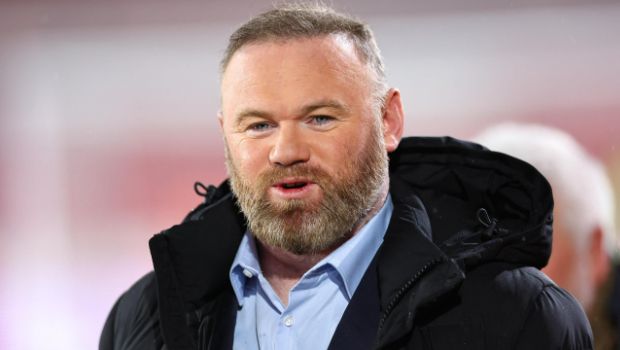
The conversation around elite footballers often avoids one uncomfortable topic for as long as possible—decline. Form can fluctuate, injuries come and go, but age is the variable no player escapes. Recently, Wayne Rooney addressed that reality directly, offering a blunt assessment of two of Liverpool FC’s most important figures: Mohamed Salah and Virgil van Dijk.
Rooney’s view is simple and, for some, uncomfortable—he believes both players are feeling the physical toll of time, and that it’s beginning to show on the pitch.
Salah’s influence at Anfield has been undeniable over the years. He has been the reference point in attack, the player who consistently delivered when games tightened. But this season has felt different.
The output has dipped, his presence in matches has fluctuated, and at times he has not been a guaranteed starter under Arne Slot. Rooney links that shift directly to age, arguing that the first sign of decline is not always technical—it’s physical.
According to his analysis, pace and explosiveness are the first attributes to fade. For a player like Salah, whose game relies heavily on sharp movement and acceleration, even a slight drop can change how defenders handle him. That fraction of a second lost in a sprint or a transition can turn a clear chance into a blocked run.
Rooney framed it in straightforward terms: legs go first.
He referenced his own experience at Manchester United, when he recognized that his role had changed and made the decision to move on rather than fight a losing battle against his own physical limits.

In Salah’s case, there are additional factors complicating the picture. A recent muscle issue has temporarily sidelined him, ruling him out of a key league fixture. While the injury is not considered serious, it reinforces the broader narrative—recovery takes longer, and the margin for peak performance becomes narrower.
Rooney didn’t stop at Salah. His comments extended to Van Dijk, a player whose role is less dependent on speed but still rooted in physical dominance.
The Dutch defender has built his reputation on control—of space, of timing, of duels. When those elements are even slightly compromised, the difference becomes noticeable. Rooney suggested that Van Dijk is entering a similar phase, where maintaining previous standards becomes increasingly difficult.
This creates a secondary issue inside the squad.
Both Salah and Van Dijk are not just starters; they are leaders. When their performances dip, it affects more than results. It impacts the hierarchy within the dressing room. Younger players, who might otherwise step forward, often defer to established figures, delaying the natural transition of responsibility.
Rooney pointed out that this dynamic can slow down renewal within a team. If senior players remain central but are no longer at their peak, the team risks operating in a kind of limbo—neither fully evolving nor maintaining its previous level.