

























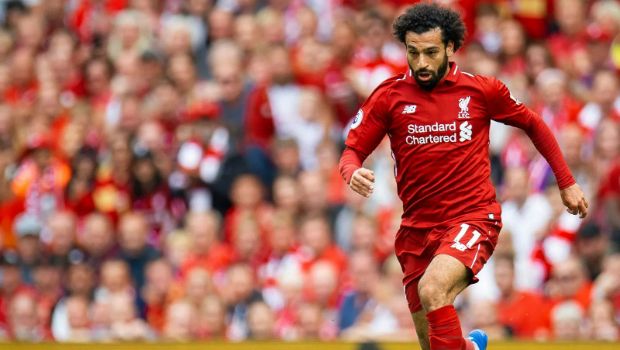
Liverpool are entering one of the most delicate transitions in their modern history. Replacing a player like Mohamed Salah is not just about filling a position—it’s about redefining how the team attacks.
With Salah set to leave at the end of the season, the club has already shifted into planning mode. The recruitment team is evaluating multiple profiles, searching for a player—or combination of players—capable of sustaining output from the right side of attack.
It is a complex challenge. Salah’s influence has been consistent, measurable, and difficult to replicate. Liverpool are not expecting to find a direct copy. Instead, they are building a shortlist based on potential, adaptability, and long-term value.
One of the names gaining attention is Yankuba Minteh.
Minteh is not the most obvious candidate, but that is precisely why he fits Liverpool’s current thinking.
At 21, the Brighton winger represents a developmental investment rather than a finished product. His numbers this season—six direct goal contributions—do not immediately place him among the league’s elite. However, raw statistics only tell part of the story.
What stands out is his ability to destabilize defenses.
Minteh operates with pace, unpredictability, and a willingness to take on defenders in isolated situations. Those traits are particularly valuable in Liverpool’s system, where wide players are expected to stretch the pitch and create space for overlapping runs and central combinations.
There is also a tactical connection.
Manager Arne Slot is already familiar with Minteh from their shared time in the Eredivisie. That familiarity reduces adaptation risk. Slot understands how to use him, where he is most effective, and what areas require improvement.

Minteh is not the only profile under consideration.
Liverpool have also been tracking younger, high-upside attackers across Europe. One of the most discussed options is Yan Diomande, a winger whose development trajectory has attracted attention from multiple top clubs.
Diomande’s valuation is significantly higher.
Reports suggest his club could demand close to $110 million (€100 million), placing him in the elite transfer bracket.
There are also alternative targets who offer different skill sets.
Bazoumana Toure, for example, represents a more flexible attacking option—someone capable of playing across multiple positions. While he may not carry the same headline value, players like him often provide tactical versatility, which is increasingly important in modern systems.
Liverpool’s approach suggests they are not locked into a single solution.
Instead, they are evaluating multiple pathways.