

























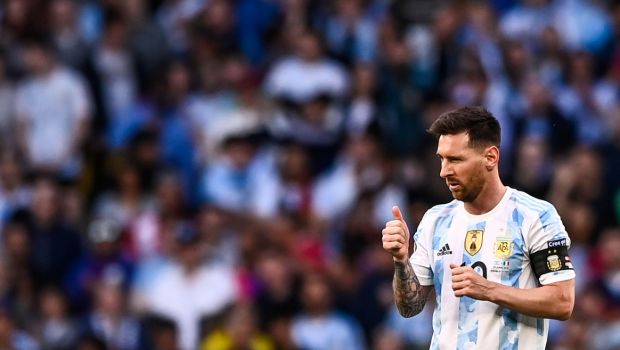
Lionel Messi is quietly preparing for what comes next. While he continues to perform at a high level on the pitch, his latest move suggests that his long-term vision is already taking shape off it.
The Argentine star has acquired full ownership of UE Cornellà, a club competing in Spain’s third division.
For those who have followed the evolution of modern football figures, the comparison is immediate. This is a path that echoes what David Beckham built over the past decade.
But Messi’s version has its own logic.
Messi’s decision to invest in a lower-division Spanish club is about control and development.
UE Cornellà operates in a competitive but less commercially saturated environment. That creates space to experiment, build, and implement a long-term model without the immediate pressure that comes with top-tier expectations.
The club also brings something valuable: identity.
Based in Catalonia, Cornellà sits within a region deeply connected to Messi’s career. His years in Barcelona shaped not only his football but also his understanding of how elite systems develop talent. This move reflects a return to that ecosystem, but from a different angle.
Ownership gives him influence over structure.
That includes youth development, recruitment philosophy, and operational direction. Cornellà already has a reputation for producing players who progress into higher levels of the game. Messi’s involvement suggests an intention to strengthen that pipeline.
The parallels with David Beckham are difficult to ignore.
Beckham’s transition from player to owner reshaped how former athletes approach their post-playing careers. His investment in Inter Miami, formalized through a clause negotiated during his MLS playing days, eventually led to the creation of a club that has grown into a global brand.
What stands out is not just the club’s existence, but how it has been built.

Inter Miami combined strategic signings, commercial partnerships, and a clear identity to accelerate its growth. The arrival of high-profile players elevated its visibility, but the structure behind the scenes ensured sustainability.
Messi has experienced that model firsthand.
Playing in Miami has given him a direct view of how ownership decisions translate into sporting and commercial outcomes. It is reasonable to assume that this exposure has influenced his thinking.
However, his approach appears more understated.
Instead of launching a new franchise in a high-profile league, he has opted to acquire an existing club with historical roots. It is a different entry point, but the objective may be similar: build something that can grow over time.
This move raises a broader question about Messi’s long-term ambitions.
Owning a club is not just about investment—it is about responsibility. It requires decision-making across multiple dimensions: sporting performance, financial sustainability, and organizational culture.
Cornellà offers a controlled environment to develop those skills.
Messi can shape the club’s direction while learning the operational side of football management. That experience could open the door to larger projects in the future, whether in Europe, the United States, or beyond.
There is also the possibility of integration.
Given his connections, Cornellà could become part of a wider network—linking youth development, scouting, and player pathways across different regions. This is a model increasingly used by modern football organizations to maximize talent identification and progression.