


























Scorecards often tell stories, but every now and then one appears that demands a second look.
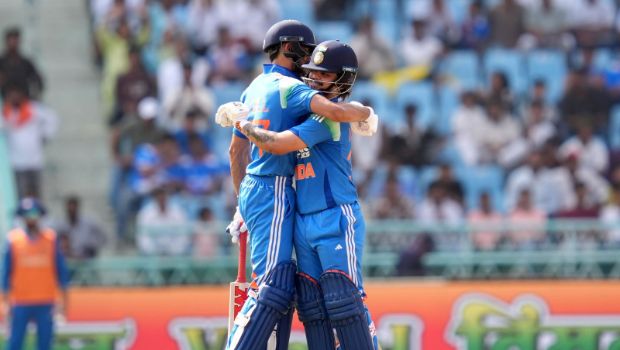
India’s 402 against Afghanistan in the second ODI was one such effort. The headline numbers were impressive enough, but what stood out was the sheer dominance of two batters. Shubman Gill’s 154 off 110 balls and Ishan Kishan’s 125 off 71 accounted for 279 runs between them — more than 69 per cent of India’s total.
In modern one-day cricket, where contributions are often spread across a deep batting order, it is unusual to see two players carry such a large share of a 400-plus total. Rohit Sharma’s 48 was the next highest score, underlining just how much of India’s innings revolved around Gill and Kishan.
At one stage, India looked capable of pushing well beyond 450. Afghanistan deserve some credit for preventing that scenario, striking back strongly in the final phase of the innings. Seven wickets for 62 runs in the last ten overs helped limit the damage and ensured India were bowled out in the final over. Yet by then, the contest had effectively been decided. A total of 402 was always going to be difficult to chase, and India comfortably secured the victory they needed to clinch the series.
Beyond the result, however, this was a significant day for the two centurions.
Gill arrived in the series carrying expectations that come with both his talent and his status as India’s ODI captain. While he had shown signs of form, including an 84 in the previous match and two half-centuries against New Zealand earlier this year, a three-figure score had eluded him since the early months of 2025.

The scrutiny surrounding his appointment as ODI captain, particularly after Rohit led India to the Champions Trophy title last year, was inevitable. Fairly or unfairly, leadership appointments are often judged through the prism of individual performances. Gill could not have asked for a more convincing response than a commanding 154. The opposition may not have been among the strongest in world cricket, but runs remain the currency of confidence, and Gill collected plenty of them.
The same applies to Kishan. Playing his first ODI since 2023, he entered the side largely because Virat Kohli’s injury created an opening. Opportunities at the international level are rarely guaranteed, and Kishan made certain this one would not be forgotten.
His century came off just 71 deliveries, showcasing the attacking intent that has made him one of India’s most dangerous white-ball players. It was also his first ODI hundred since the memorable double century against Bangladesh in 2022, an innings that coincidentally came in a massive partnership with Gill.
With the World Cup approaching, competition for places remains fierce. But after an innings like this, Kishan has firmly placed himself at the forefront of India’s wicketkeeper conversation. On a day dominated by big numbers, that may ultimately prove the most significant takeaway of all.