

























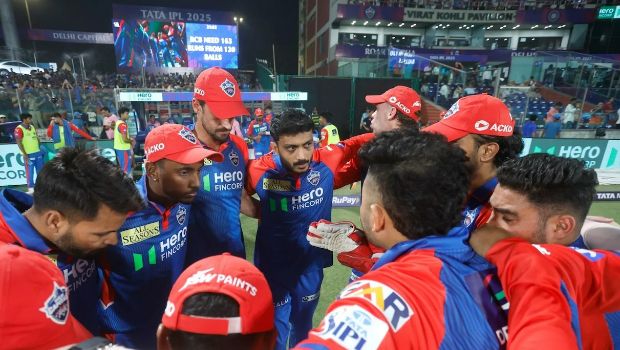
Not a single IPL season goes by without someone looking at the Delhi Capitals squad and saying, “That’s a solid bunch of players.” And yet, year after year, what looks impressive on paper hasn’t always translated into a championship.
So what does 2026 hold for Delhi? A closer look at how they built their squad at the latest player auction offers some clues.
Among their notable additions were Auqib Nabi, the promising allrounder from Jammu & Kashmir, along with experienced international names such as David Miller, Ben Duckett, Pathum Nissanka, Lungi Ngidi, and Kyle Jamieson. On paper, it’s a group that offers batting depth, bowling variety, and flexibility.
From an auction strategy standpoint, Delhi appeared to move in a fairly organized manner. Sri Lankan opener Pathum Nissanka looks like a particularly smart acquisition, even though fitting him into the playing XI could prove tricky. The team also needed a backup for Mitchell Starc, and they’ve found one in Ngidi, who will surely get more playing time now the Starc won’t play the initial few matches.
Delhi wanted another overseas middle-order batter—enter Miller. And if they were searching for a top-order aggressor, Duckett fits that role perfectly.
The bigger question is how Delhi balances its bowling resources. Do they bench Mukesh Kumar to accommodate Aaibq Nabi? Or do both feature in the same XI? Given T Natarajan’s injury history, Nabi could very well step into that role if needed.
Spin remains one of Delhi’s biggest strengths. Axar Patel, Kuldeep Yadav, and Vipraj Nigam form a solid trio, while Nitish Rana can chip in with part-time overs if required.

If there is a potential weak spot, it could be the top order. That’s largely because one player—Ben Duckett—has yet to play in the IPL, while another, Prithvi Shaw, has struggled to find consistency in recent seasons.
If form holds up, however, Delhi’s ideal top three could be Duckett, KL Rahul, and Shaw. One possible approach is to open with Shaw, move Rahul to No.3, and slot Abishek Porel at No.4. Alternatively, Delhi could bring Nissanka into the XI at the top and reshuffle accordingly. With Rana at five, Tristan Stubbs at six, and Axar at seven, the batting unit looks dependable—even if not explosively destructive.
Where Delhi truly stand out is in their bowling.
Starc will not start the IPL as he charts his comeback from injury, but whenever he returns, he will lead the attack. Kuldeep provides wicket-taking threat in the middle overs. Axar remains one of the most reliable T20 bowlers in the game, while Nigam adds another spin option. The attack offers variety too: left-arm pace, right-arm pace, wrist spin, and orthodox spin.
All things considered, Delhi may not field the most intimidating XI in the tournament – but they could field one of the most efficient.
And as the old saying goes: batters win you matches, bowlers win you trophies. So could 2026 finally be Delhi’s year?