
























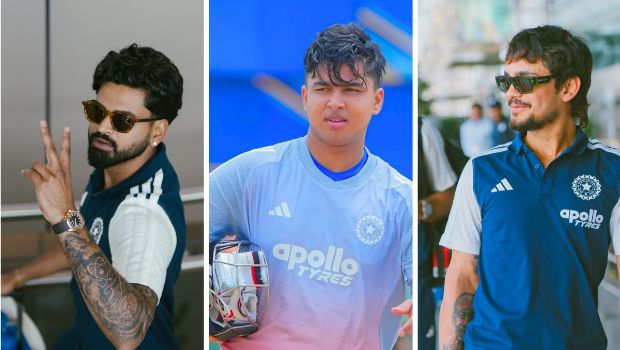
Indian cricket is never short of watershed moments, but this week feels genuinely significant. Earlier in June, Shreyas Iyer became India’s 15th T20I captain, replacing Suryakumar Yadav, and now, with two T20Is against Ireland in Belfast starting this Friday, a new chapter begins one written with ambition, youth, and a very clear long-term vision.
The circumstances of the transition are worth examining closely. Suryakumar’s omission was somewhat expected. The 35-year-old struggled to find runs for the team, and a run drought that lasted almost two years finally ended his tenure — even despite leading the side to their third T20 World Cup title earlier this year. It is a ruthless but recurring theme in modern Indian selection: sentiment yields to pragmatism. In 2025, Rohit Sharma similarly captained India to the Champions Trophy title before being replaced as ODI captain before the next series. India reward history, but they don’t live in it.
Iyer’s appointment is bold for a different reason: he hasn’t played a T20I for India since December 2023, with his absence rooted in India’s inability to find a place for him given squad combinations. Yet his credentials as a leader are hard to argue with. He captained Kolkata Knight Riders to the IPL title in 2024 and led Delhi Capitals and Punjab Kings to finals in 2020 and 2025 respectively. The BCCI’s choice is a statement that captaincy quality and tactical intelligence matter as much – perhaps more – than recent international minutes. Teammates and coaches speak of a man who brings emotional intelligence to go alongside tactical clarity: someone who speaks to a debutant with the same register as a senior international, whose self-belief has only deepened with time.
The squad Iyer inherits is, broadly, the one that won the World Cup – but with one extraordinary addition. If Sooryavanshi features during the Ireland tour, he will become the youngest player ever to debut for India in men’s international cricket. At 15, he would surpass legendary Sachin Tendulkar’s record of 16 years and 205 days.
The comparison to Tendulkar has been made carefully and deliberately, and Sooryavanshi’s numbers arguably justify the weight of it. He won the IPL 2026 Orange Cap with 776 runs in 16 innings at a strike rate of 237.30, his season including one century, five half-centuries, and a record 72 sixes. Just last Sunday in the India A tri-series final, he broke the world record for the fastest-ever List A fifty, off just 11 balls, before falling for 94 off 29 balls in a match-winning performance. Reports from the Times of India indicate he is all set to play the first T20I of the Ireland series on June 26 in Belfast, at the very ground where Rohit made his own debut nearly two decades ago.

The wider strategic context gives this transition deeper meaning. The BCCI and team management have made their long-term priorities explicit: intent, continuity, and future planning, with one eye firmly on the LA 2028 Olympics and the T20 World Cup 2028. Cricket’s inclusion in the Los Angeles Games is a transformational commercial and sporting moment, and India – as the sport’s financial engine – will be expected to deliver both on and off the field. Building a team around a 31-year-old captain and a 15-year-old opener is not as contradictory as it sounds; Iyer provides the leadership architecture for a transition period while Sooryavanshi represents the peak-years talent that will carry the team into the 2030s.
There is, of course, a question of whether this new India can handle the burdens that come with expectation. Iyer must rediscover his own international T20 batting rhythms after more than two years away from the format, even as he manages a squad navigating fresh responsibilities. Sooryavanshi must navigate the weight of anticipation that has followed him since he was 13 years old – and do so on the world stage, in Belfast, with the whole of India watching.
But if the early signals are any guide, neither seems remotely daunted. That, perhaps, is the most compelling thing about this new Indian T20I era: it doesn’t feel tentative. It feels ready.