

























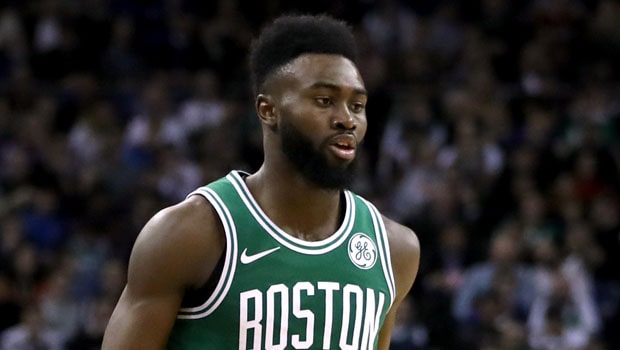
Steve Nash, a two-time NBA MVP, recently weighed in on Jaylen Brown and his candidacy for the Michael Jordan Trophy this season. While Brown has delivered strong individual performances, Nash suggested he does not currently view the Celtics star as the league’s top MVP candidate.
Speaking during the NBA on Prime broadcast, Nash explained that Boston’s overall success and the coaching impact of Joe Mazzulla complicate Brown’s case. Nash indicated that Mazzulla has received significant credit for the Celtics’ strong season and suggested that both coach and player may share responsibility for the team’s performance.
Nash also referenced on/off metrics that have drawn attention this season. He noted that while Brown’s individual performances have been impressive, the Celtics’ on/off numbers do not fully align with the traditional MVP narrative. Nash added that lineup combinations, including stretches where Brown plays alongside bench-heavy units, could influence those statistical splits.
The Numbers Behind the Debate
As of February 26, through 52 games, the Boston Celtics were +156 with Brown on the floor and +247 when he sits. Advanced metrics tell a similar story. Boston owned a defensive rating of 113.9 with Brown playing and 104.9 when he is off the court. The team’s on/off net ratings stood at 4.5 with Brown and 12.5 without him, with the latter figure leading all players in that category.

Those numbers have fueled debate about Brown’s true impact within Boston’s system, particularly as MVP conversations intensify.
However, not everyone agrees with the interpretation of those statistics. The Athletic’s Sam Vecenie pushed back on the notion that the Celtics are demonstrably better without Brown. Writing on social media, Vecenie argued that relying heavily on on/off splits in this context overlooks important variables.
He pointed out that in the six games Brown has missed, Boston faced several undermanned opponents or teams playing under difficult scheduling circumstances. Vecenie suggested that the small sample size and quality of competition limit the reliability of those numbers as a definitive measure of Brown’s value.
As the MVP race continues to take shape, Brown’s candidacy remains intertwined with Boston’s overall dominance. The conversation highlights the broader tension between traditional production, advanced metrics, coaching influence, and narrative momentum in determining the league’s most valuable player.