
























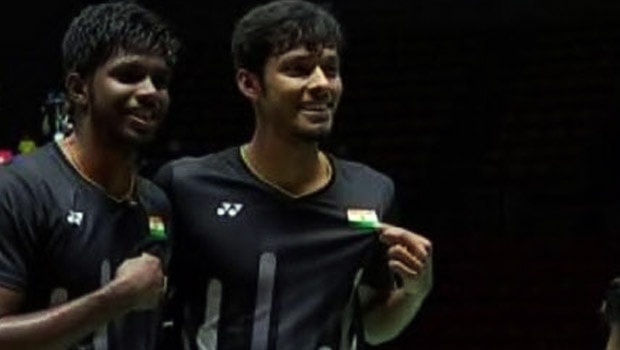
Chirag Shetty has called for a rethink of the Thomas Cup tie format after India’s semifinal defeat to France left the nation’s star men’s doubles pair without a chance to play.
India’s campaign ended with a 3-0 loss to France on Saturday, forcing the 2022 champion to settle for a bronze medal. The result also meant that the celebrated doubles partnership of Chirag and Satwiksairaj Rankireddy never stepped onto the court during the tie.
Under current Thomas Cup regulations, players cannot participate in consecutive matches or play doubles before singles. France’s unusual strategy of using the Popov brothers — Christo and Toma Junior — in both singles and doubles created a scheduling situation that delayed the top doubles clash unless the contest extended beyond three matches.
That never happened.
France wrapped up the semifinal through victories in all three singles encounters. World No. 4 Christo Popov defeated Ayush Shetty, while Alex Lanier overcame Kidambi Srikanth before Toma Junior Popov sealed the tie with a straight-games win over H.S. Prannoy.
Speaking after the tournament, Chirag described the situation as highly unusual and suggested the current structure gives France a tactical advantage.
“I can’t really comment on if it’s fair or not because it’s in the rule book. It’s always been there,” Chirag said. “It’s a very extraordinary situation because there hasn’t been a strong badminton playing nation who puts singles players in their doubles matches as well.”
The Indian shuttler noted that most traditional badminton powers rarely use top singles players in doubles combinations, making France’s approach particularly effective under the existing format.

India would likely have enjoyed an advantage had the tie progressed further. Hariharan Amsakarunan and M.R. Arjun were set to face a lower-ranked French pair in the second doubles, while a potential deciding match would have featured World No. 4 duo Satwik-Chirag against the Popov brothers.
France used the same strategy successfully in the quarterfinals against Japan before eventually finishing runner-up to China in the final.
Chirag argued that momentum and scoreboard pressure significantly influence team competitions, rejecting suggestions that the order of matches makes little difference.
“When your team is down 2-0, it puts an immense amount of pressure on the player who’s playing the third tie,” he said. “Whereas if you are leading 2-0, even the best of the best will crack under pressure.”
The 28-year-old proposed a possible solution by recommending that at least one doubles match should be included among the opening three rubbers of a tie.
“I think at least one, either the first doubles or the second doubles, should be played in the first three matches,” Chirag said, adding that fans also lose out when ties end before any doubles action takes place.
His comments are likely to reignite debate around the structure of team badminton events and whether the current format still reflects the balance of the modern game.