

























There is something unmistakably familiar about an India versus England World Cup semi-final.
Over the past two editions of the ICC Men’s T20 World Cup, these two heavyweights have met at the penultimate stage with vastly different outcomes. In 2022, England dismantled India by 10 wickets at Adelaide Oval. In 2024, a battle-hardened Indian side, wiser and more tactically astute, returned the favour by knocking England out in Providence.
Now, almost two years later, they collide again — this time at the iconic Wankhede Stadium — with both teams arriving via somewhat similar paths.
Neither India nor England have dominated this tournament in the manner expected of title contenders.
India have won six of seven matches, but theirs has been a campaign of narrow escapes rather than ruthless supremacy. England, too, have stumbled through phases, suffering one defeat and enduring prolonged struggles at the top of the order.
India’s batting has oscillated between fragility and brilliance. Abhishek Sharma began the tournament with three consecutive ducks and has only one score above 15. Ishan Kishan has been unpredictable. Suryakumar Yadav, barring an unbeaten half-century, has looked unusually constrained against spin.
Tilak Varma’s tournament has been a study in contrast — pedestrian returns at No. 3, explosive cameos when moved down the order. Hardik Pandya has fluctuated alarmingly. Ironically, Shivam Dube has been India’s most consistent batter.
The turning point came when Sanju Samson was restored to the top. A brisk 24 off 15 in a must-win against Zimbabwe reset the tone, and his career-defining 97* off 50 balls against West Indies in Kolkata sealed a pressure chase of 197 that revived India’s campaign.
And yet, conviction has remained elusive.
India’s bowling has been steady without being spectacular. Varun Chakravarthy leads the wicket charts with 12, but has appeared predictable at times. Jasprit Bumrah has been effective without reaching his usual unplayable heights. Arshdeep Singh has struck early but lacked sustained menace.
Hardik’s returns with the ball have been underwhelming. Axar Patel has been tidy. Kuldeep Yadav has featured sparingly.
Fielding, too, has been a concern — dropped catches at crucial junctures have kept opponents alive.
This is a team that has frequently been under the pump. They were 76/6 against USA before Suryakumar’s 84* rescued them. Namibia’s Gerhard Erasmus tangled their middle order. Even in a 61-run win over Pakistan, batting frailties were evident. South Africa exposed them brutally with a 76-run hammering.

And yet, India are here.
If India have flickered, England have sputtered.
Jos Buttler, their premier white-ball batter, is enduring a tournament to forget: 62 runs in seven innings at an average under nine. Since modest contributions against Nepal and West Indies, he has managed little of substance.
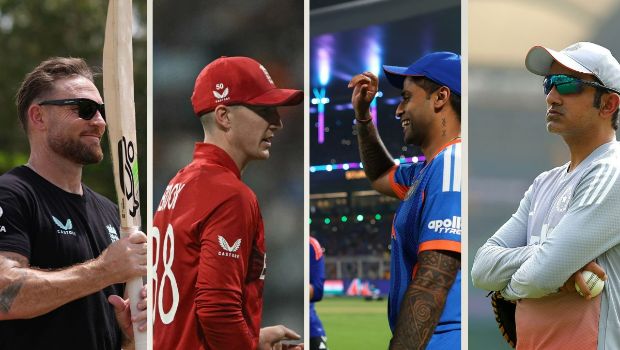
Phil Salt, Tom Banton and Jacob Bethell have one fifty each. Harry Brook’s stunning 50-ball century against Pakistan — prompted by Brendon McCullum’s decision to promote him — remains England’s defining batting moment. Will Jacks has been their most consistent presence in the finishing role, with Sam Curran providing lower-order value.
Yet England’s bowling has compensated.
Adil Rashid leads with 11 wickets. Jofra Archer and Liam Dawson have 10 each. Jamie Overton and Jacks have chipped in. Curran’s death overs have been decisive. The wildcard is Rehan Ahmed — impactful and fearless on World Cup debut in that thriller versus New Zealand.
The Wankhede is traditionally a high-scoring venue. The pitch offers pace and carry early, rewarding strokeplay, while also bringing quick bowlers into the game under lights.
On such a surface, struggling batters may rediscover fluency. That possibility makes this semi-final deliciously unpredictable.
Both teams carry baggage. Both have form concerns. Both possess match-winners capable of flipping the narrative in a single session.
Momentum may have nudged India forward after their wins over Zimbabwe and West Indies. But England, battle-tested in knockout cricket, will not be overawed.
History suggests this rivalry at the semi-final stage produces defining statements.
Another one awaits in Mumbai.