


























India’s journey through the group stages in this ongoing T20 World Cup 2026 has felt like a side carefully planning for what lies ahead rather than living fully in the present. There has been a clear sense that they were building towards a bigger moment — preparing for scenarios that might unfold in the Super Eight and beyond.
The tactical decisions reflected that mindset. There were instances where they seemed intent on bowling second, anticipating the likelihood of dew becoming a decisive factor later in the tournament. Even within matches, certain bowling choices suggested a broader plan at work. On more than one occasion, someone like Varun Chakaravarthy did not complete his full
allocation of overs, seemingly to allow a wider spread and give other bowlers greater exposure and rhythm.
All of it pointed towards a team thinking long term. But that long-awaited moment has now arrived. The time for looking ahead has passed. It is no longer about building towards something; it is about delivering in the here and now. Realistically, this is a must-win game. The challenge for India is to shift their focus entirely to the present and respond accordingly.
In terms of team selection, wholesale changes would not be wise. Inevitably, conversations revolve around balance and individual form, but this is not the stage to overhaul the side. The only adjustment worth serious consideration is the return of Axar Patel. The question is not simply whether he should come back in, but how India structure their spin options around him. One of Washington Sundar or Kuldeep Yadav could be considered alongside Axar, depending on the balance they want. That combination potentially strengthens the bowling depth while still maintaining batting flexibility.
Rinku Singh’s place is the area that invites scrutiny. His form has been underwhelming, and the amount of time he has spent in the middle — even with India not playing anywhere near their best with the bat — raises legitimate questions. One possible route is to play Axar and
include either Sundar or Kuldeep as the additional spin option, while leaving Rinku out. That would give India greater variety and control with the ball, especially if conditions demand spin.
Importantly, Axar is more than capable with the bat in that role, which softens the impact of dropping a specialist batter. Such a combination could offer India both flexibility and security without dramatically disrupting the core of the side.
As for the top order, it should remain unchanged. There has been some discussion about Sanju Samson returning, but it is important to remember why he was left out in the first place. He was struggling for runs. In sport — and cricket in particular — there is often a
strange phenomenon where a player not in the side is viewed with heightened value. Absence can create perception. But the fact remains: he was omitted because he was not producing the runs required. Now is not the time to start jettisoning players or reacting impulsively. Now is the time to back the players who have been entrusted with the responsibility and allow them
to see the team through this critical phase.

The bowling unit largely picks itself. It was encouraging to see Jasprit Bumrah open the bowling. That felt like a wise and calculated move against the Proteas. However, there is a
downside to that approach. When Bumrah takes the new ball, it can leave Hardik Pandya slightly exposed in the middle overs, which is precisely what unfolded. The decision to open with Bumrah previously was clearly influenced by specific match-ups — particularly targeting influential batters such as Quinton de Kock and Aiden Markram. In that context, it made perfect sense.
Against Zimbabwe, however, the same logic may not necessarily apply. It could be just as effective to revert to Hardik with the new ball and deploy Bumrah more in the middle overs. Whether Bumrah continues to open or operates later in the innings is not the defining factor. The key is flexibility and execution. As for Chaka.ravarty, he had an off day — but that is not something one expects to happen frequently. There is no need for drastic reaction.
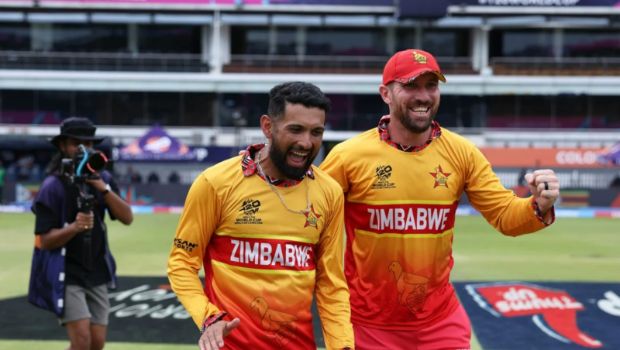
Zimbabwe arrive in this contest after a heavy loss to the West Indies. This will be their second game in India, having previously played in Sri Lanka, and they appear to be a side still adapting to conditions. Their bowling attack, featuring pace-off variations and leg-spin options, was more suited to Sri Lankan surfaces. Indian conditions will demand subtle adjustments — perhaps changes in length and approach.
Chennai adds another variable. Having hosted numerous matches there, the surface can differ significantly depending on the soil — black, red, or mixed — each behaving in its own way. If India had a preference, it would surely be for a flat pitch. They would not want excessive assistance for slower balls sticking in the surface or conditions that overly reward pace-off bowling. A true surface would allow their batters to express themselves freely and score at pace. Zimbabwe possess useful bowlers capable of taking the pace off effectively, and they will be eager to respond strongly after their previous defeat. India would rather negate that threat by playing on a surface conducive to stroke-making.
The biggest concern for India remains their starts with the bat. They have grown accustomed to explosive openings from Abhishek Sharma alongside either Sanju Samson or Ishan Kishan. Those flying starts have often meant that by the middle overs, India felt ahead of the game, enabling the middle order to play with freedom and confidence.
That dynamic has not materialized in this World Cup. The strong starts have been missing. As a result, the middle order has been exposed to greater pressure, tasked with rebuilding or accelerating from less-than-ideal positions. That additional expectation has made run-scoring more difficult, and India’s middle phase has struggled to cope with that shift.
The equation is simple: if India secure a flying start, the entire complexion of the innings changes. Confidence flows, pressure dissipates, and roles become clearer. But until now, that has not happened. Rectifying that issue is perhaps the central challenge in this must-win encounter.
This game has also arrived sooner than many might have anticipated in terms of significance. It feels like a knockout match — an unexpected but undeniable reality given how the Super Eight stage has unfolded. Yet, there is opportunity within that pressure. If India come through this contest emphatically, delivering a statement performance, it could serve as the spark they have been waiting for. It might be the game that propels them through the remainder of the Super Eight and into the semifinals with renewed belief and authority.
The stakes are immense for both sides. Zimbabwe will aim to rebound strongly; India must assert themselves. Having spent much of the tournament preparing for future scenarios, India now face the defining test of the present. Expect a huge performance — not simply because they want it, but because they need it.